 THE MINERAL RICHTERITE
- Chemistry: Na2Ca(Mg, Fe)5
Si8O22(OH)2,
Sodium Calcium Magnesium Iron Silicate Hydroxide.
- Class: Silicates
- Subclass: Inosilicates
- Group: Amphibole
- Uses: Only as mineral specimens
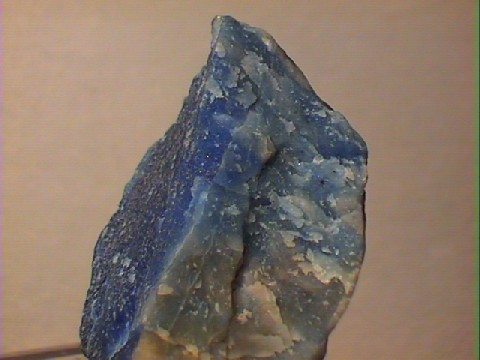
Specimens
Richterite, which is sometimes called soda tremolite, is closely related to tremolite. It basically is the sodium rich version of tremolite which is calcium rich. Another closely related mineral is
Richterite, ferrorichterite, fluororichterite and tremolite belong to the Amphibole Group of minerals. This is a large group of double chained silicates where chains of silicates are held together by the metal ions sodium, calcium, iron, magnesium, aluminum and sometimes other metals such as manganese, titanium, potassium and lithium. Richterite often contains some manganese, fluorine and potassium and these are sometimes included in its formula or referred to as a variety such as K-richterite or fluor-magnesio richterite. All these similar sounding variety names and related species make for some confusion.
Ricterite is not a common mineral, but is found world wide as a small constituent in unusual rocks. Richterite is found in contact metamorphosed limestones, ultramafic igneous extrusives, metasomatic deposits and alkaline igneous rocks. Its type locality of Langban Mine and Pajsberg, Varmland, Sweden and Kipawa, Quebec, Canada are richterite's only consistent sources of good crystals. When crystals are seen they usually are slender and prismatic with typical amphibole diamond-shaped cross sections. Some richterite has been found in the meteorite debris at Canyon Diablo in Arizona.
PHYSICAL CHARACTERISTICS:
- Color is brown, reddish brown, yellow and light to dark green.
- Luster is vitreous to dull.
- Transparency: Crystals are generally translucent, but some specimens are translucent.
- Crystal System is Monoclinic; 2/m
- Crystal Habits include long prismatic crystals. Crystals can have a diamond-shaped cross-section although rarely symmetrical. Also found granular, massive and occasionally in radial aggregates.
- Cleavage is imperfect in two directions at 56 and 124 degrees.
- Fracture is uneven.
- Hardness is 5 - 6.
- Specific Gravity is approximately 2.9 - 3.3 (average for translucent minerals).
- Streak is brown.
- Other Characteristics: pleochroic in translucent specimens. Large crystals have an almost striated or grainy appearance.
- Associated Minerals are quartz,
feldspars,
aegirine,
arfvedsonite,
diopside,
pectolite,
phlogopite,
chromite,
Iron-nickel,
roedderite ,kosmochlor ,krinovite , tainiolite, calcite, fluorite,svabite , sodalite and eudialyte. - Notable Occurrences include the type locality of Langban Mine and Pajsberg, Varmland, Sweden as well as Mont Saint-Hilaire and Kipawa, Quebec, Canada; Myanmar; Madagascar and Leucite Hills, Wyoming and in the meteorite at Canyon Diablo, Arizona.
- Best Field Indicators are crystal habit (especially cross-section), color and cleavage.
 Amethyst Galleries' Mineral Gallery MINERALS |
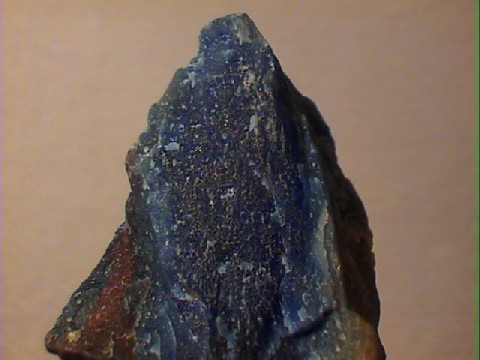
$ 100.00
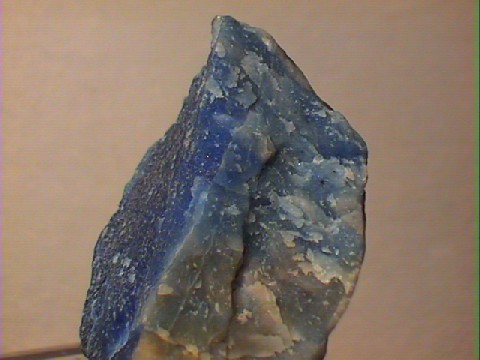
ric-1 ($100.00)
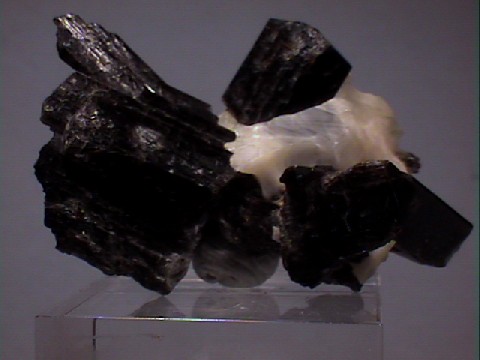
$ 75.00
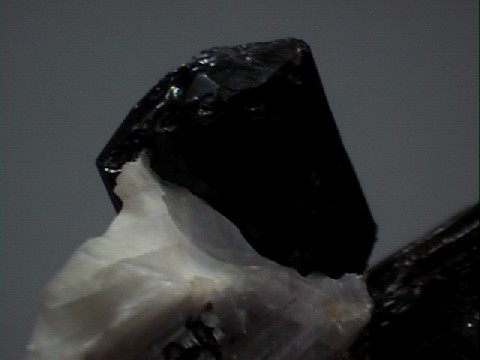
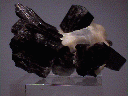
ric-2 ($ 75.00)