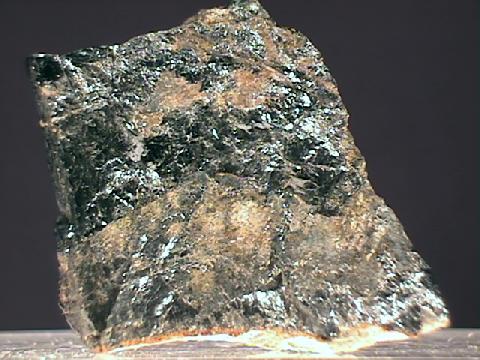
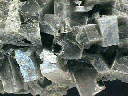
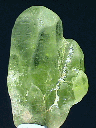
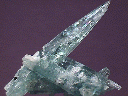
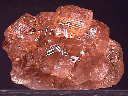
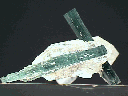
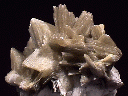
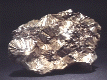
The Epidote Group minerals are silicates of the general formula A2B3(SiO4)3 (OH, F). The A ion can be calcium, cerium, lead, strontium and/or yttrium. The B ion can be aluminum, iron, vanadium, magnesium and/or manganese. In some Epidote Group minerals there is some substitution of oxygens for hydroxides on the silicate tetrahedrons producing a formula of A2B3Si3O11 (OH, F)2. The structure of the Epidote Group minerals is composed of both SiO4 groups and Si2O7 groups in equal proportions. Epidote Group minerals could be classified as nesosilicates but the higher organization of the Si2O7 groups places them in the sorosilicate subclass. Silicate tetrahedral oxygens in the formula are combined with aluminums such that, together, they form chains of interconnected octahedrons. The silicate groups share oxygens with these chains and completing the structure are the A ions and the left over B ions.
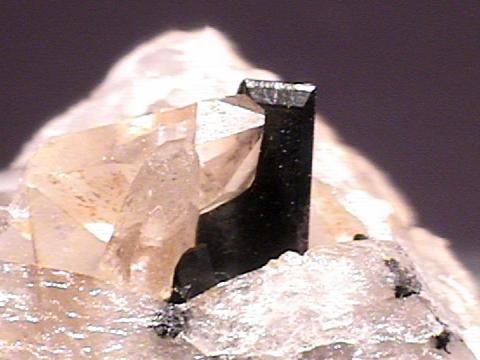
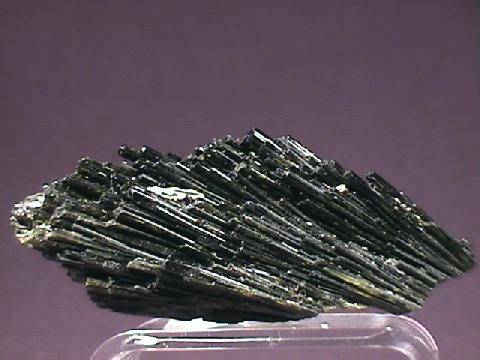
The epidote group is composed of a number of members, but only the mineral
epidote is common.
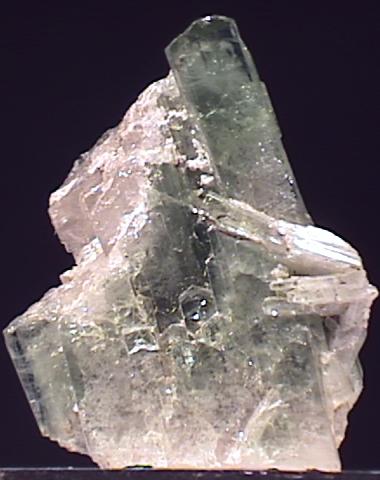
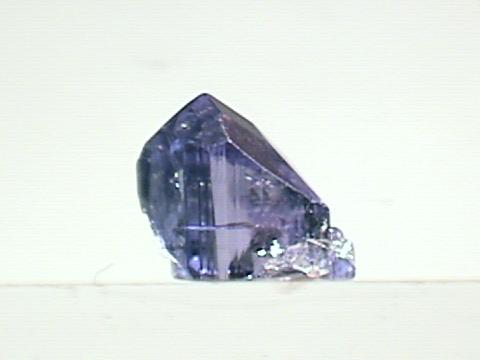
Zoisite is used as a gemstone (a variety known as
tanzanite) and as an ornamental stone.
These are the members of the Epidote Group of minerals: |
Copyright ©1995-2009 by Amethyst Galleries, Inc.
Site design & programming by galleries.com web services