 THE MINERAL ESPERITE
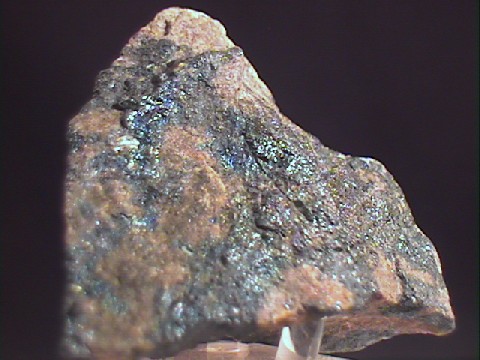
- Chemistry: Ca3PbZn4(SiO4)4 , Calcium Lead Zinc Silicate.
- Class: Silicates
- Subclass: Nesosilicates
- Group:
Trimerite - Uses: A very minor ore of zinc and as mineral specimens.
Specimens
Esperite is one of the 70 some fluorescent minerals from Franklin and Sterling Hill, New Jersey. It will fluoresce a nice yellow color under short-wave ultraviolet light. This fluorescent color is in striking contrast to the normal color of esperite. Under normal light, esperite is white or colorless. Fluorescence occurs when the ultraviolet light (invisible to humans) imparts energy to some of the atoms in the mineral. This energy is converted by the atom into visible light that we can then see. The following table shows the more common fluorescing minerals with their respective fluorescing colors, from Franklin and Sterling Hill, New Jersey.
| Mineral: | Fluoresces: | Mineral: | Fluoresces: | Mineral: | Fluoresces: |
| Barite | white | Esperite | yellow | pale violet | |
| Calcite | red | Fluorite | Violet | Willemite | green |
| Clinohedrite | orange-yellow | Hardystonite | Violet-blue | Wollastonite | red |
These minerals are sometimes found in association with each other and can make for wonderfully colorful fluorescent specimens. Esperite is a product of the metamorphism of zinc minerals, such as hemimorphite and/or smithsonite, that were caught up in the regional metamorphism that created the wonderful Franklin site. Esperite is found in significant quantities only at Franklin and Sterling Hill, New Jersey.
PHYSICAL CHARACTERISTICS:
- Color is white or colorless.
- Luster is vitreous or greasy to dull.
- Transparency: Specimens are translucent to opaque.
- Crystal System is monoclinic.
- Crystal Habits include massive and granular specimens.
- Cleavage is poor.
- Hardness is 5.
- Specific Gravity is approximately 4.3 - 4.4 (above average)
- Streak is white.
- Other Characteristics: Fluoresces a yellow color under short-wave UV light.
- Associated Minerals include willemite,
zincite,
franklinite,
larsenite , clinohedrite, calcite and hardystonite. - Notable Occurrences include its type locality at Franklin, New Jersey as well as Sterling Hill, Sussex County, New Jersey, USA and Bolivia.
- Best Field Indicators are fluorescence, associations, locality and poor cleavage.
 Amethyst Galleries' Mineral Gallery MINERALS |
$ 70.00
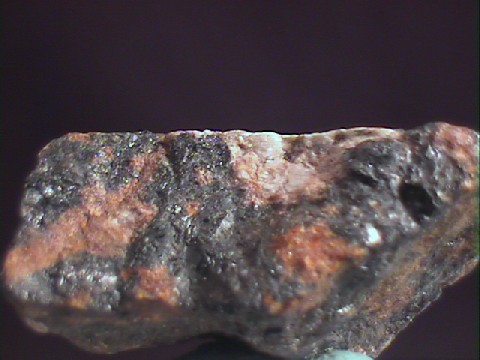
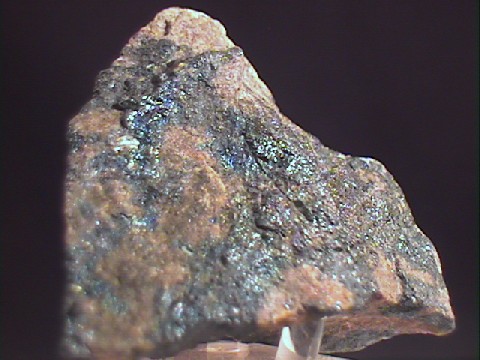
esp-1 ($ 70.00)